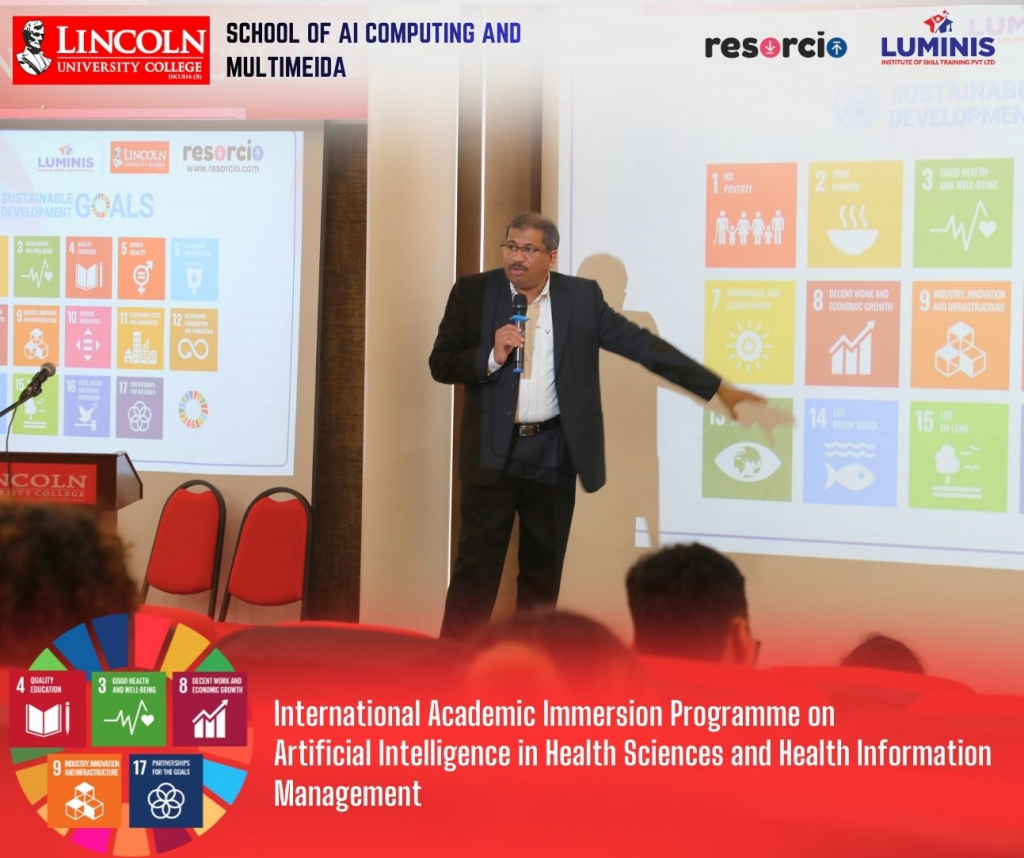
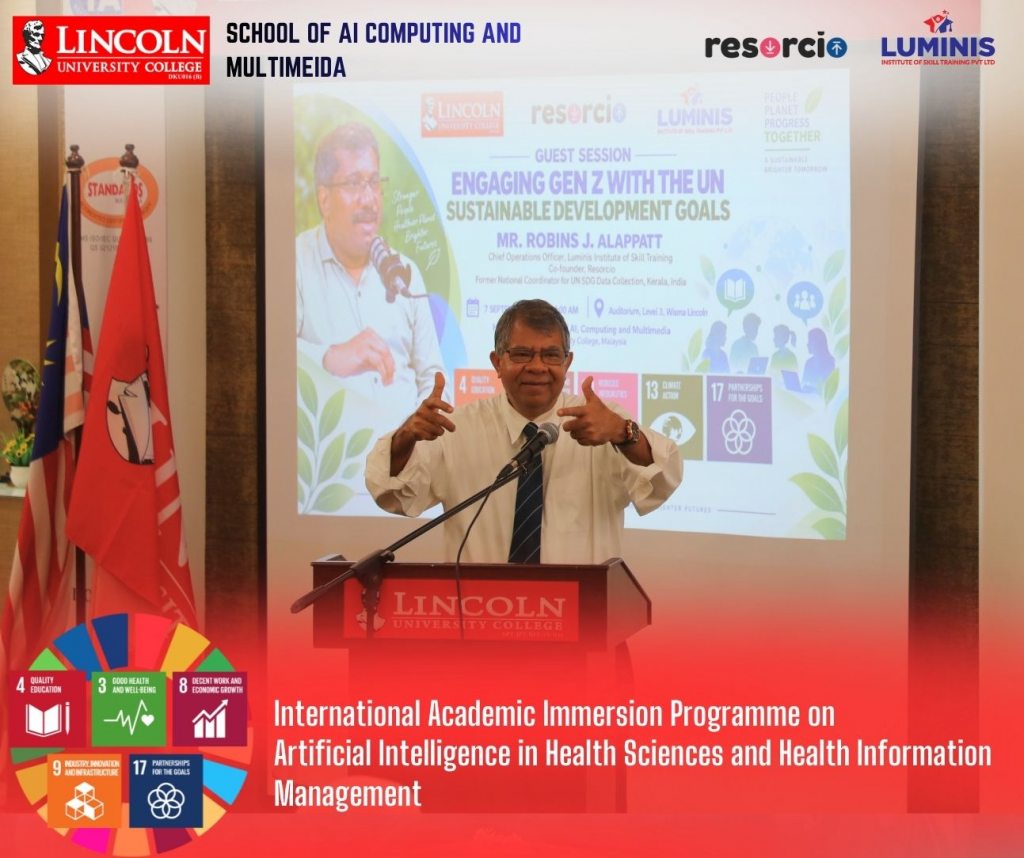
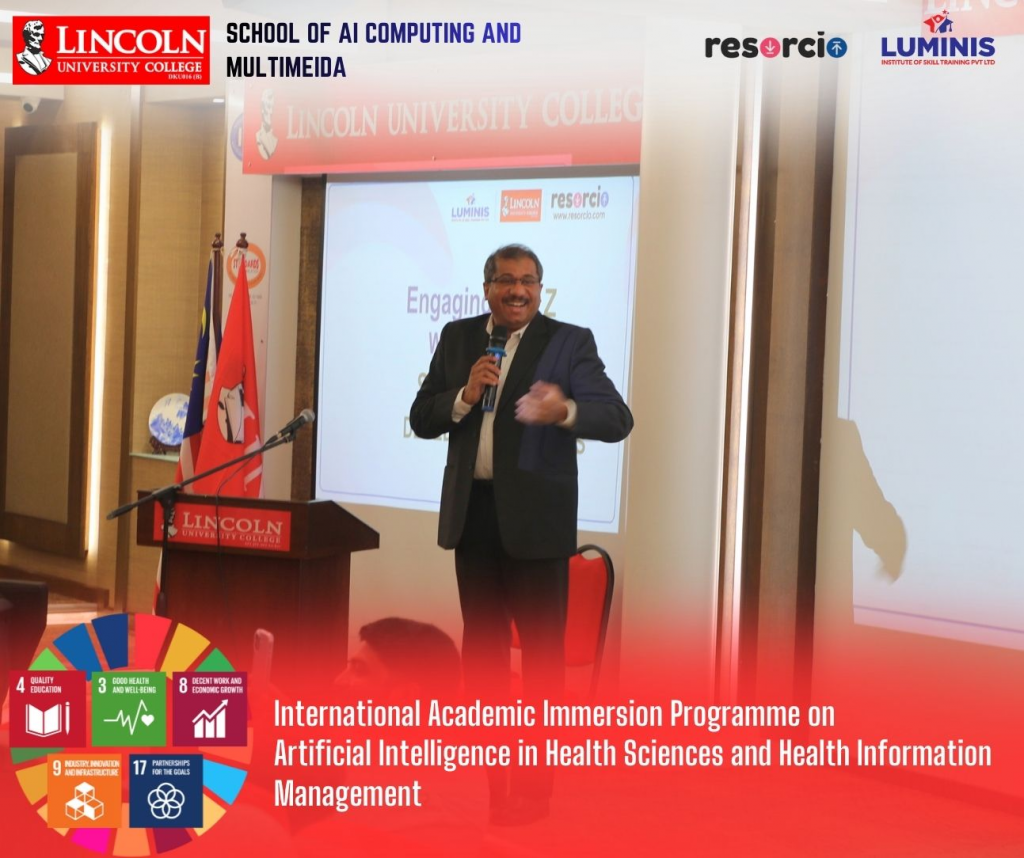
The School of AI Computing and Multimedia at Lincoln University College Malaysia hosted a guest session titled Engaging Gen Z with the UN Sustainable Development Goals on 7 September 2026. The session was delivered by Mr Robins J. Alappatt, Chief Operating Officer of Luminis Institute of Skill Training, Co-founder of Resorcio and former National Coordinator for UN SDG Data Collection in Kerala, India.
The session examined how sustainability can be communicated to Generation Z in a way that is relevant to their experiences, aspirations and social environment. The presentation linked the global goals with education, employability, inclusion, climate responsibility and collaborative action.
- Understanding the SDGs as a practical framework for individual, institutional and community action.
- Recognising the environmental and social factors that shape Gen Z attitudes and behaviour.
- Connecting quality education with future-ready skills and meaningful work.
- Encouraging inclusive participation so that young people from different backgrounds can contribute.
- Translating climate awareness into informed choices and visible action.
- Using partnerships to scale learning, engagement and measurable impact.
Goal | SDG | Contribution evidenced by the activity |
4 | Quality Education | Improved awareness of the SDGs through a focused learning session designed for younger learners. |
8 | Decent Work and Economic Growth | Connected education, skills and responsible career development with sustainable economic participation. |
10 | Reduced Inequalities | Emphasised inclusive engagement and the need to involve diverse groups of young people in development. |
17 | Partnerships for the Goals | Highlighted collaboration among education providers, communities and external partners as a route to action. |
Institutional relevance
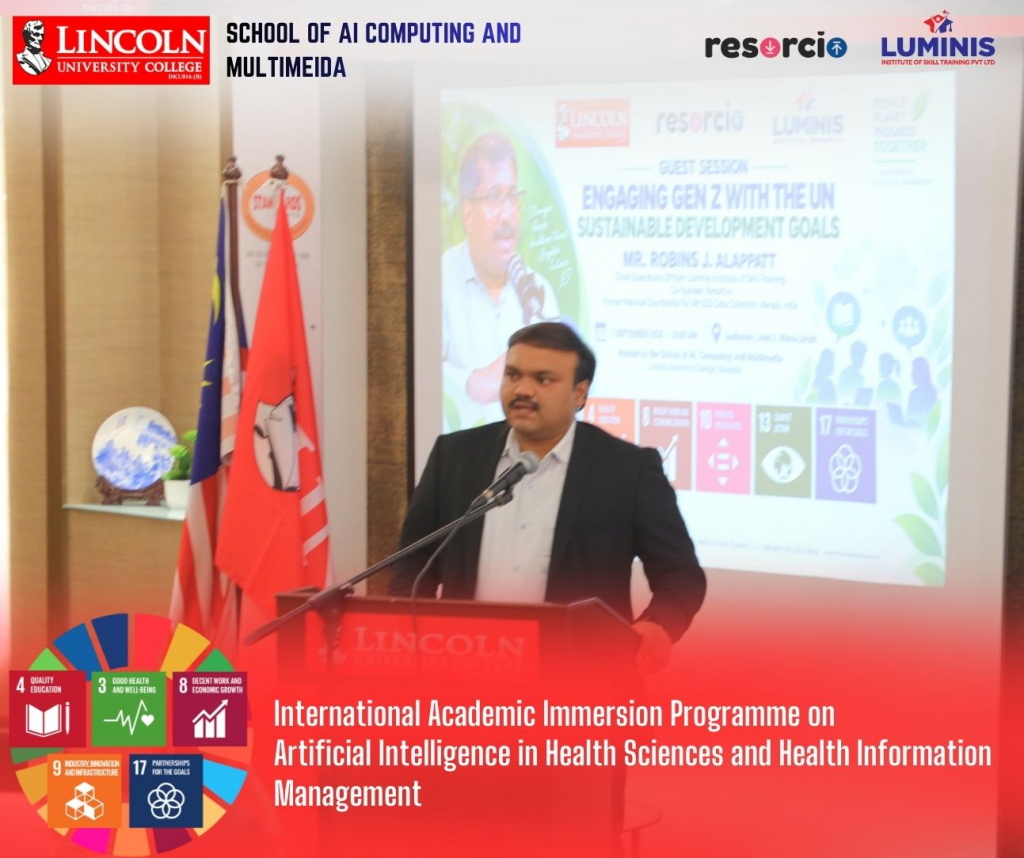
For Lincoln University College, the session strengthened SDG literacy within an international academic programme and showed how sustainability can be integrated into student engagement. It also provided a foundation for follow-up activities such as student-led campaigns, SDG-focused projects, reflective assignments and evidence-based reporting of outcomes.